
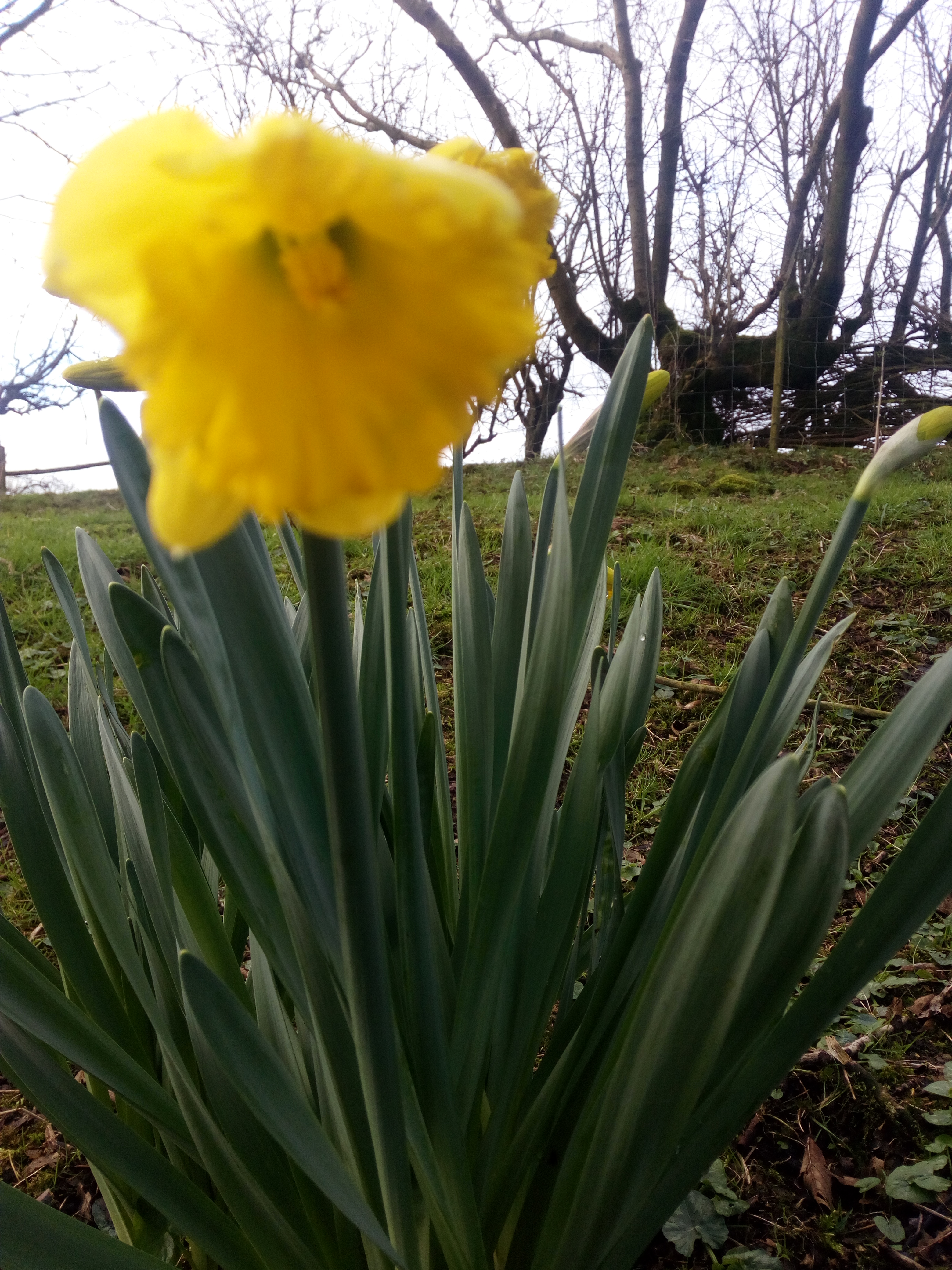
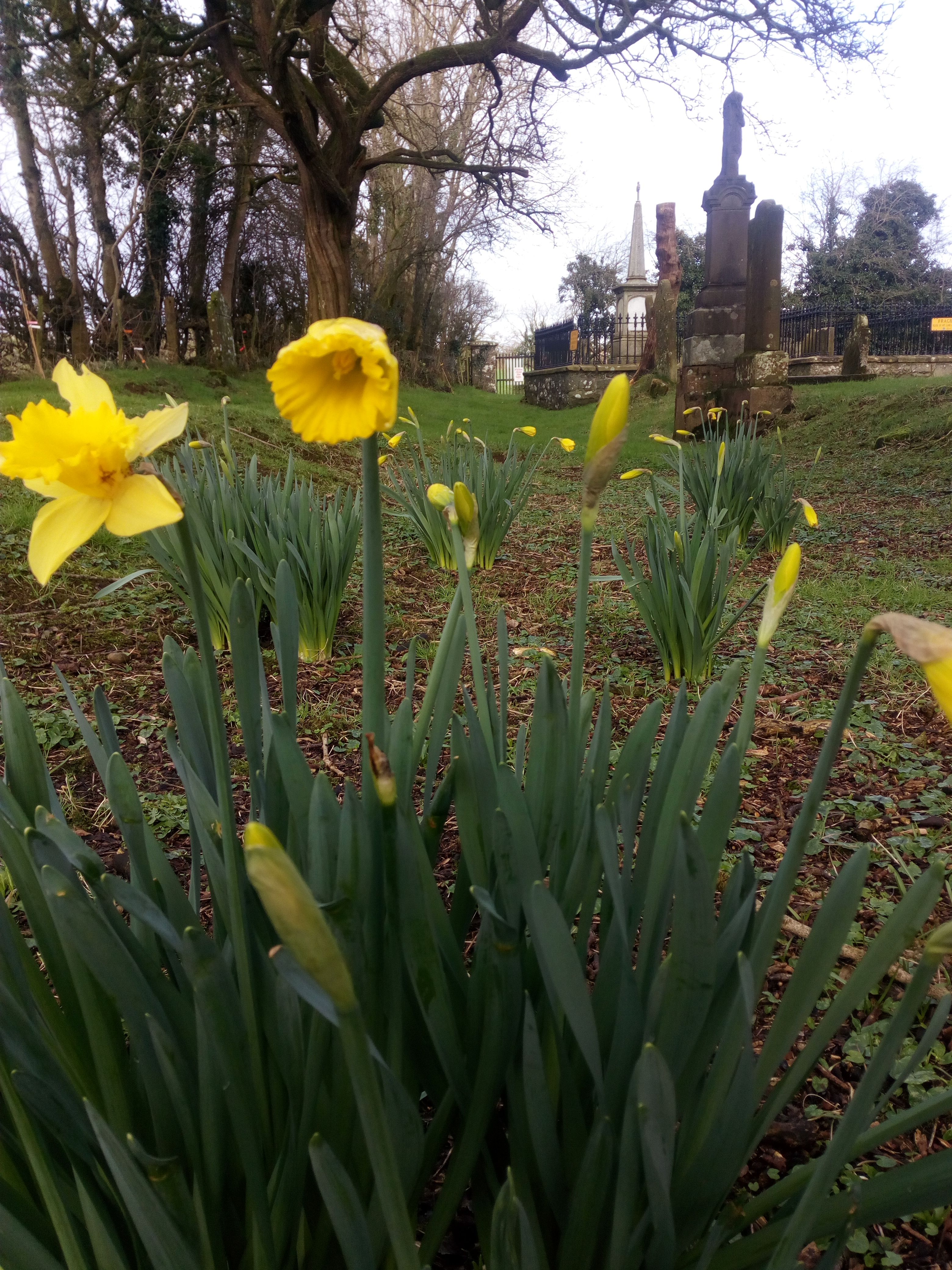
You’ve all seen them, waving gently in the Spring breezes, looking proud and stately. They bring a splash of colour to a drab landscape still fighting to shake off its Winter shroud. Yes, it’s the wonderful daffodil we’re talking about.
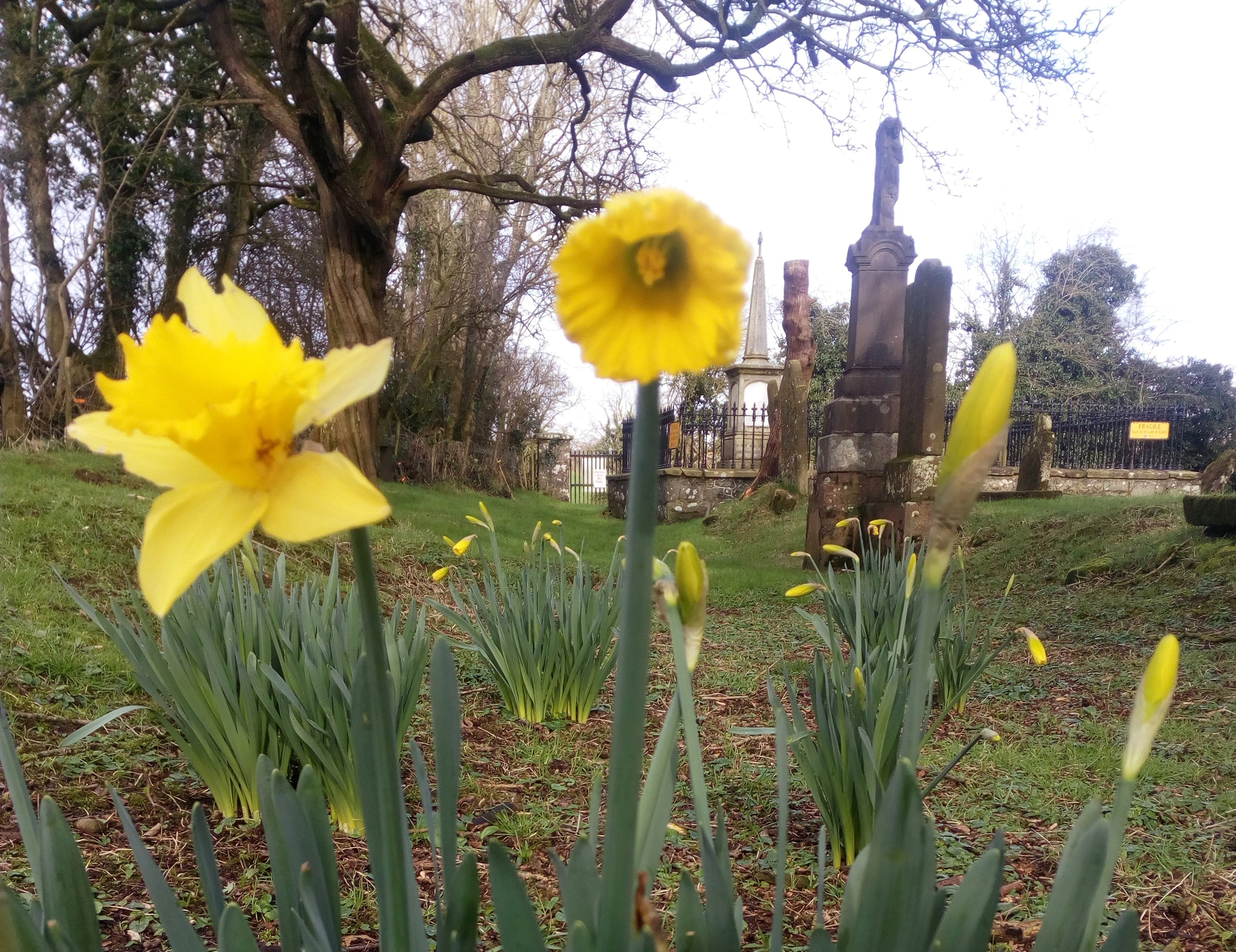
Known in Latin as Narcissus, from the family Amaryillidoideae (try saying that on a cold morning). The one we’re most familiar with is the Narcissus pseudonarcissus. Apparently it’s so good they named it twice.
There are approximately 26,000 different types of daffodils in existence (Kew Gardens), but that includes hybrids. Of the original plants, there are 36 species. Strange that we only regularly see the one type whilst out and about when there are Trumpet, Double, Triandus, Cyclamineus, Jonquilla, Tanzeta, Bulbocodium, Split corona and, our favourite name, Poeticus, to name but a few. The titles of the plants are almost as beautiful as the daffodils themselves.
Daffodils are not thought to be indigenous to Ireland, although no one can agree as to when they were introduced. Perhaps it was some romantic Anglo-Norman who brought them here as a gift for his Irish beloved after having been on a bender with cousins in Wales. We could give Strongbow credit… but we won’t. Whoever brought them, they are a welcome addition to Irish flora.
In Irish Gaelic, the Daffodil is know as Lus an cromchinn. This has a beautiful meaning, as do the names of so many Irish plants and animals. Lus simply means plant. However, crom means bent or stooped, and chinn means heads. So in Gaelic they are referred to as the Stooped-heads plants. Isn’t that so descriptive and apt?
As an aside, here are some other Gaelic names for plants and animals that might interest and perhaps impress you.
- Cowslip – Bainne Bó Bleachtáin (Juice of the milk cow)
- Otter – Madra/madadh uisce (water dog)
- Snowdrop – Plúirín sneachta – (little snow flower)
- Foxglove – Lus na mban sídhe (Fairy woman plant – note the banshee reference)
- Common Irish lizard – Earc luachra (Speckled one of the rushes)
- Jellyfish – Smugairle róin (seal snot)
- Bat – Sciathán leathair (leather wings) & Bás dorcha (dark death)
- Pine marten – Cat crainn (tree cat)
- Fox –Madra/madadh rua (red dog)
- Shrew – Dallóg Fhéir (little blind one of the grass) ain’t that poetic?
- Barn owl – Scréachóg Reilige (little loud noise of the graveyard)
- Stoat – An Bheainín uasal (the little lady)
- Rabbit – Preabaire poill (hopper of the holes)
- Porpoise – Muc Mhara (sea pig)
- Goldfinch – Lasair Choille (bright flame of the forest)
- Wood pigeon – Ferán Eidhinn (little man of the ivy)
- Otter – Doburchú (water hound)
- Chaffinch – Rí rua (red king)
- Green finch – Glasán Darach (little green one of the oak tree)
- Kestrel – Pocaire Gaoithe (wind frollicker)
- Pied wagtail, also known locally as the Willy wagtail – Siobháinín an Chairn Aoiligh (little Siobhán of the dung heap)
- Wolf – Mactíre (son of the land)- This one is a favourite here
- Bullfinch – Corcrán Coille (Little scarlet one of the woods)
- Wren – Drúi Donn (brown druid)
- Heron – Síle na bPortach (Sheila of the bog)
- Seal – Lao mara (sea calf)
- Jay – Scréachóg na Choille (little loud noise of the wood)
As you might notice, we have moved well away from daffodils with the mention of seal snot. But it serves to demonstrate just how descriptive the Gaelic language is. Many of the flora and fauna listed above have other names also. The most obvious would be coinín for rabbit, hence coney. Different region had their own names for various creatures. Many of those will, sadly, have been lost.
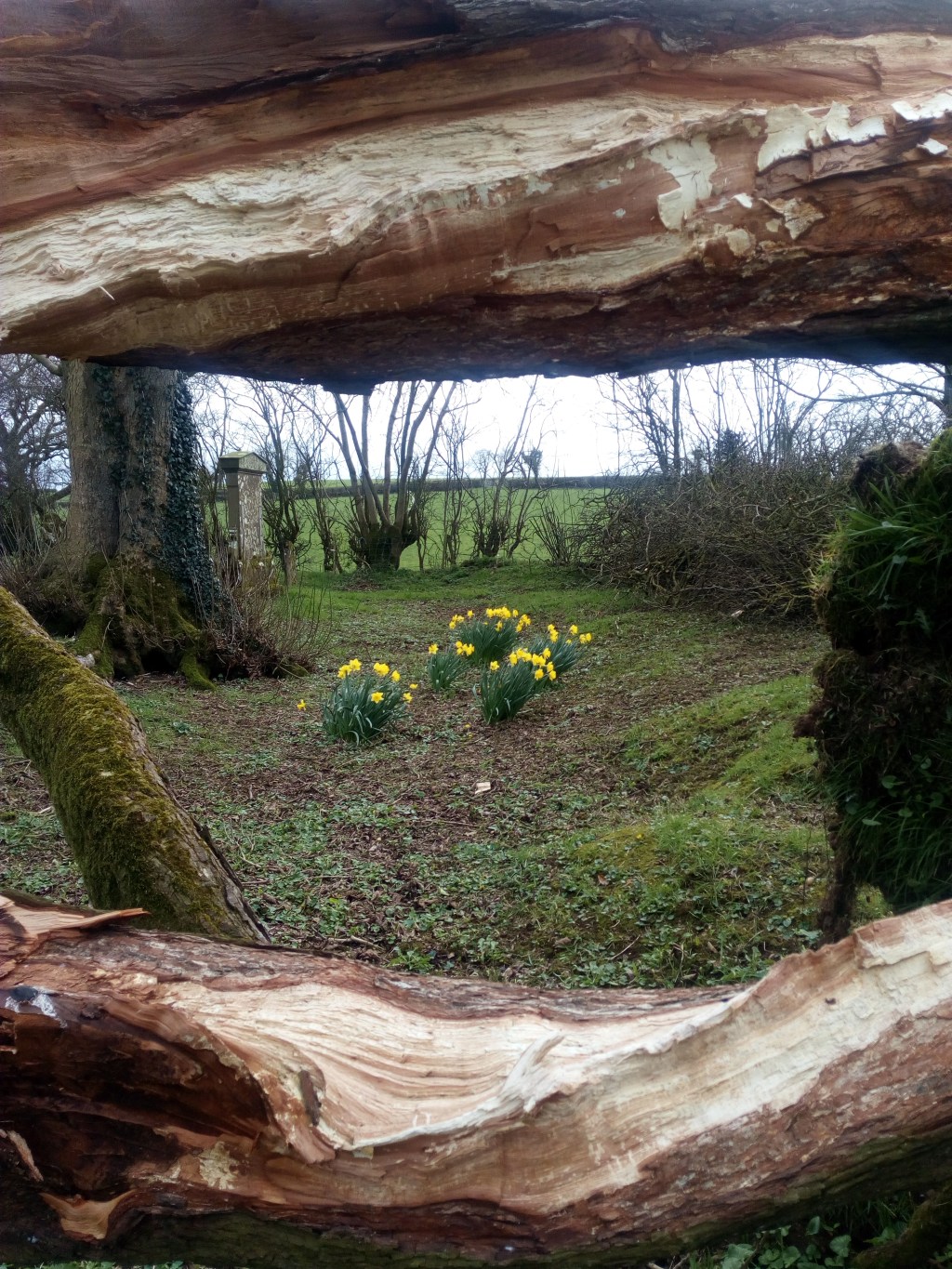
Getting back to daffodils (remember them?), we should tell you that it is the national flower of Wales. It is known there as Cennin Pedr (Peter’s leek), and is also the county flower of Gloucestershire. It is a poisonous plant and should never be eaten. The daffodil grows early, before the foliage of the trees emerge, thus avoiding the shadows and getting the sunlit nourishment they require.

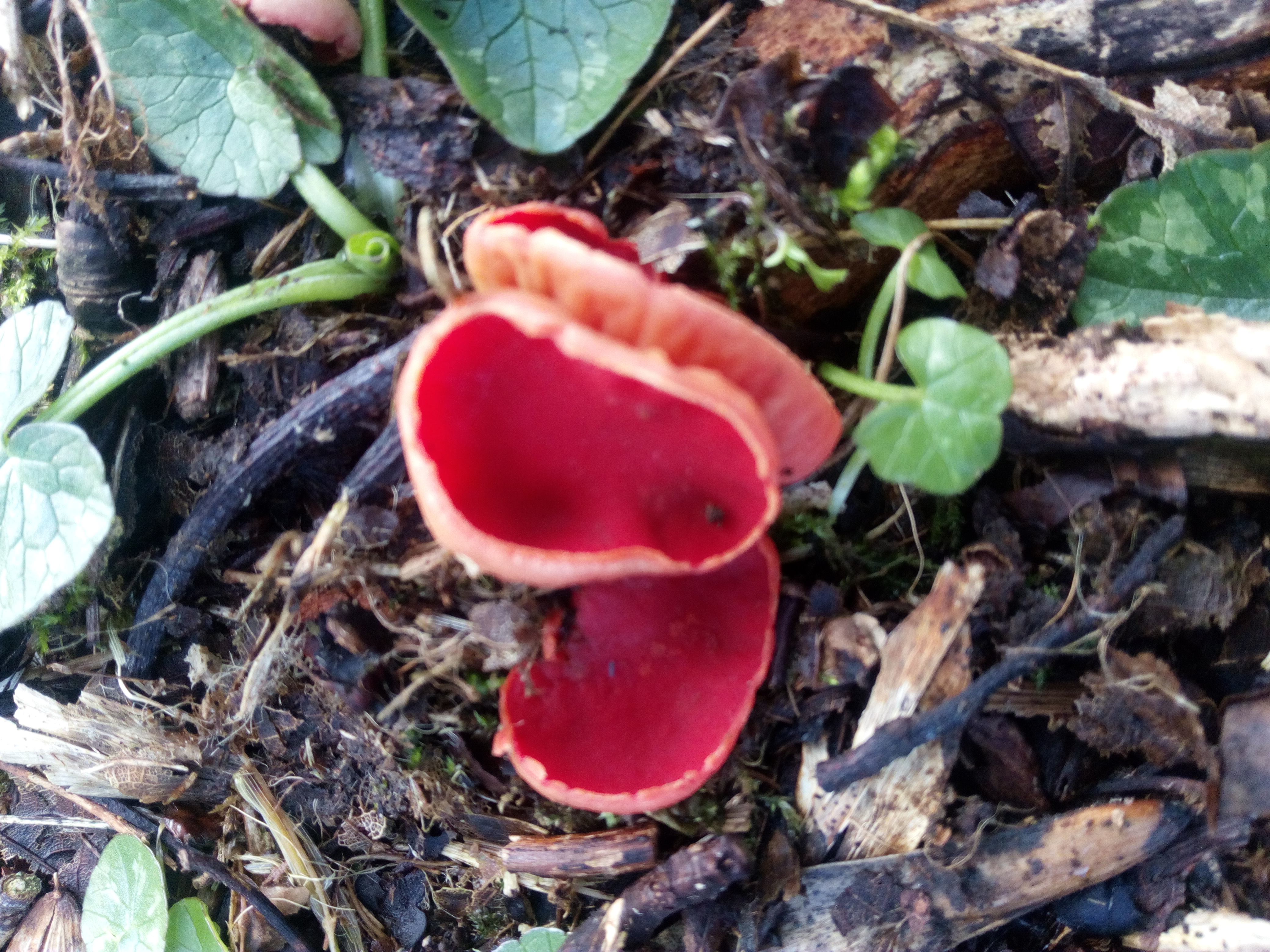
Yes, we noticed the red yoke in there. We thought that would grab your attention. It was photographed the same day as the daffodils. There’s some debate as to the exact name for this particular fungus. It could be The Scarlet Elfcup Fungus (sarcoscypha austriaca) – there seems to be a recurring mythological theme at this religious site. Or it might be the Ruby Elfcup (sarcoscypha coccinea). They are very alike. As a microscope is required to tell the difference, you are safe with just calling it an Elfcup. It prevents crazed and pedantic mycologists from attacking you with their soggy mushrooms.
Apparently, neither variety of Elfcup are overly common in Ireland, so we’re lucky to have some examples at Ballyeglish. It’s favoured as a food source for both rodents and slugs. Although inedible for humans, it has been used by Native Americans as a medicine in preventing bleeding. Please ask an expert before trying anything like that with it though. The name comes from a superstitious belief that elves drank dew from them in the morning, probably to slake their thirst after a heavy night on the rip with both pixies and faeries. An elfcup would have been little use to those lads in Lord of the Rings. Big fellas, that lot.
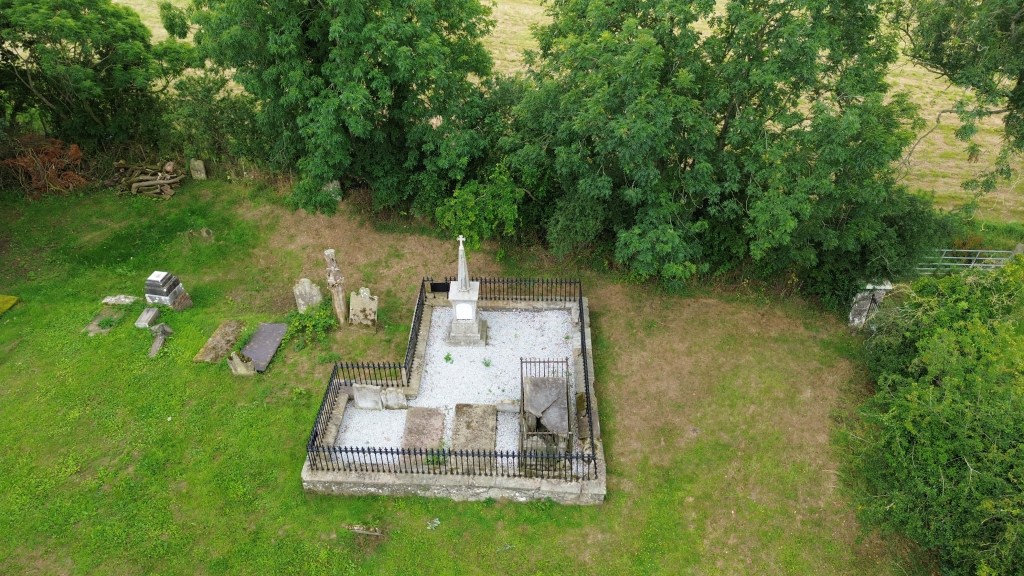
Here, at the tail-end of winter at Ballyeglish Old Graveyard, we have both red and yellow to brighten up the scenery. Imagine what both Spring and Summer will bring us…
Bígí linn
- co
- Cowslip

 The Ballyeglish Society
Leave a comment