
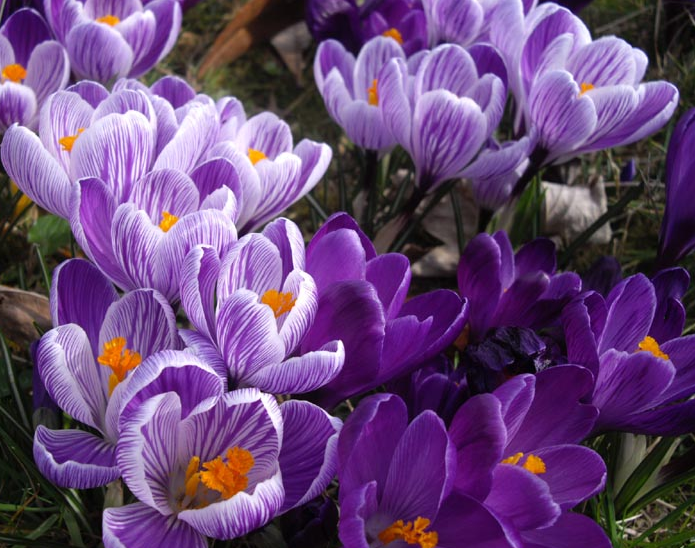
Over the years, many different types of plants and flowers have been seen and enjoyed at Ballyeglish Old Graveyard. Some are prominent, whereas others provide a pleasant surprise when happened upon. This year, it’s the crocus that emerged from the winter chill to delight visitors to the ancient site.
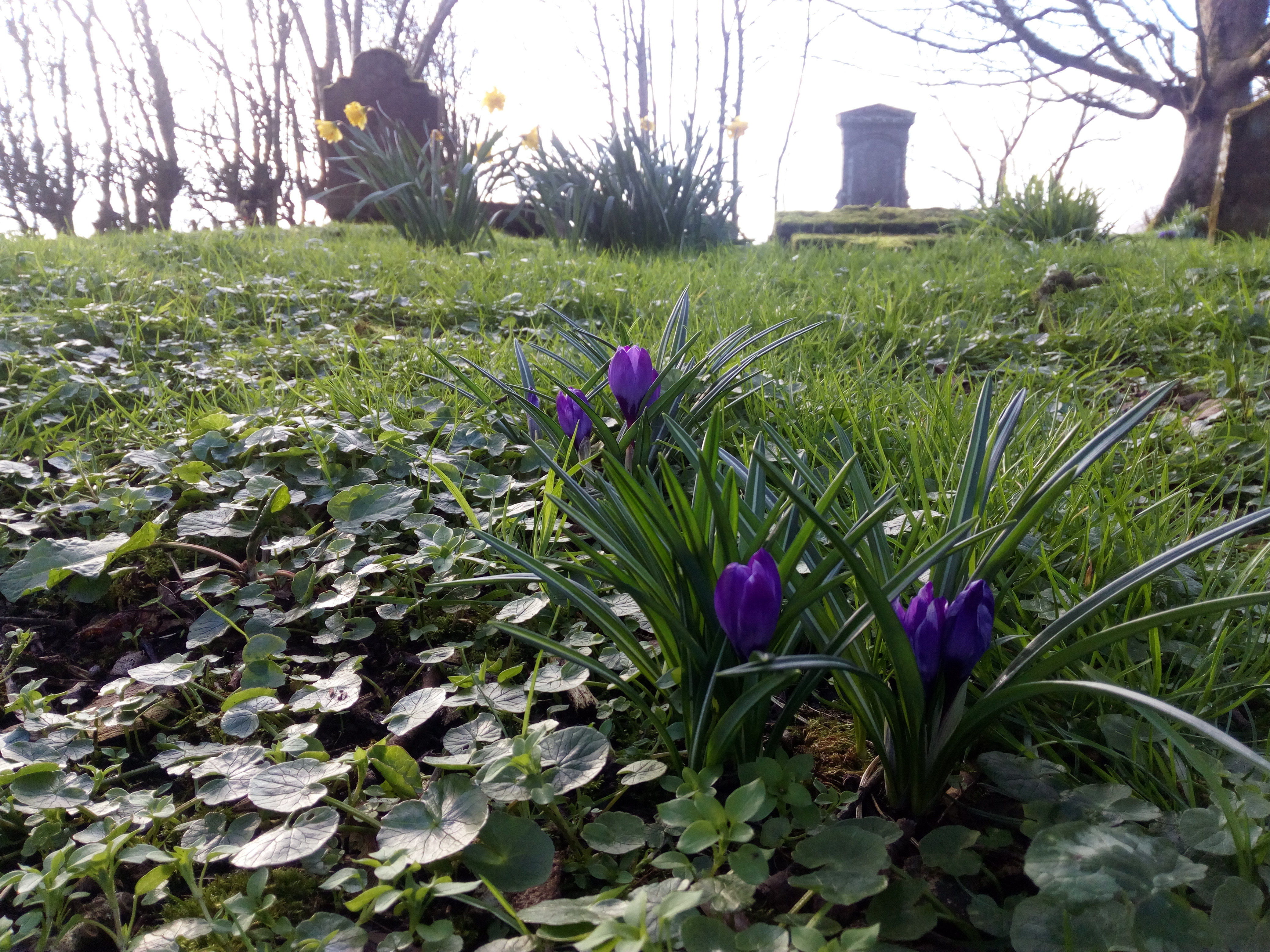
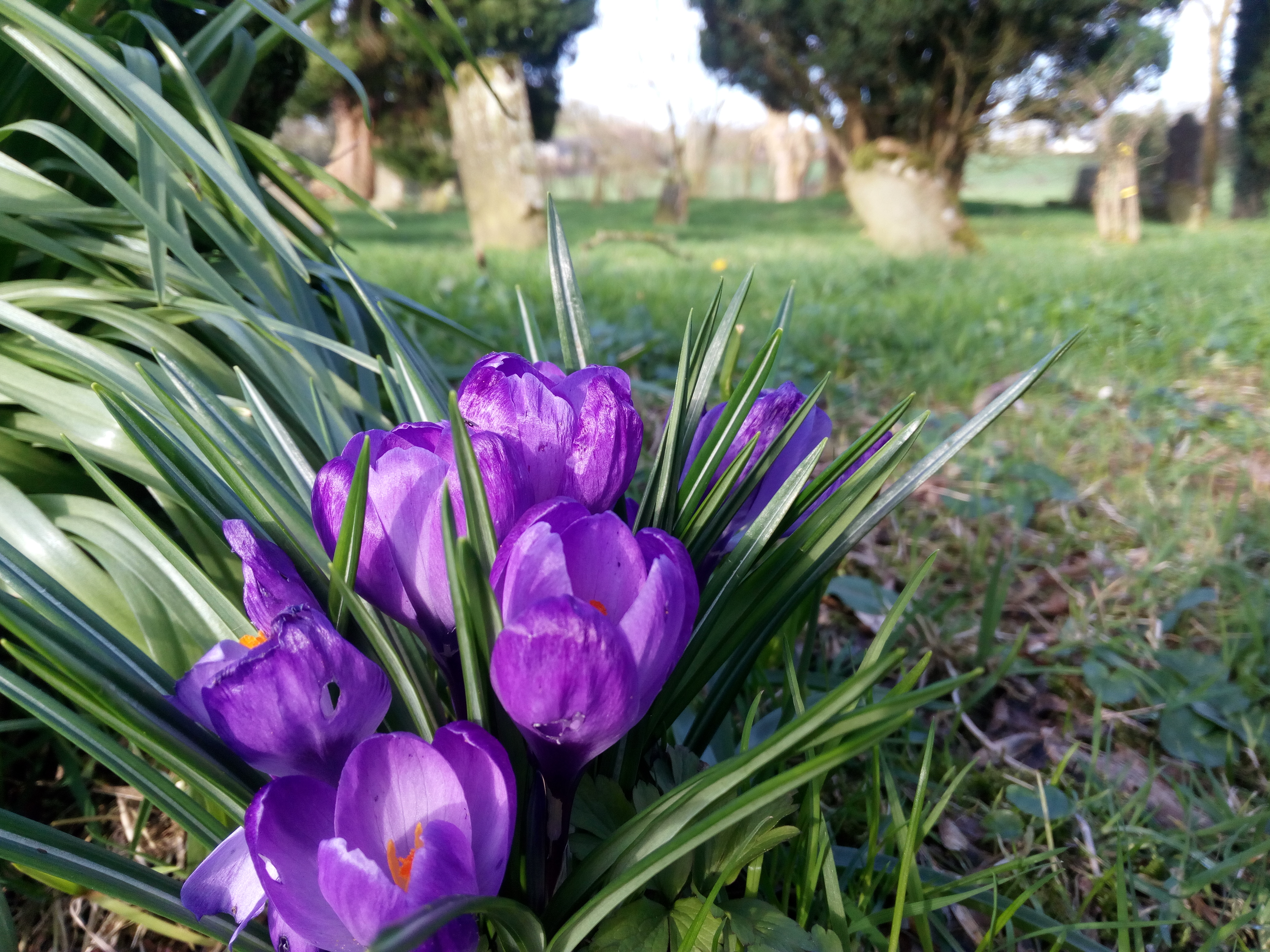
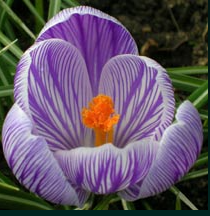
The Crocus vernus is a beautiful little flower full of colour and style. It’s not native, being indigenous to the Alps, the Balkans and the Pyrenees. It has many cultivars (off-shoot varieties), such as Jeanne d’Arc, Pickwick and Queen of Blues, and is usually seen in graveyards and along road verges across The Celtic Isles. The vernus in the title comes from vernal, which relates to Spring.
In Greek mythology, Crocus was a young man who has a number of legends attached to him. One is that he fell in love with a nymph, Smilax (kinda like a name you’d give a crazy clown), but became unhappy with it all, so the gods turned him into a flower that today bears his name. His ex-lover was turned into bindweed, which is a thorny climber, so it seems that misogyny was alive and well on Mount Olympus.
Another story tells that he died in an incident when playing a game of discus with the god, Hermes. Apparently, Crocus stood up a tad too quickly and lost his head. His blood flowed to the ground (well, it would, wouldn’t it…) and a flower sprang forth in that spot which was named the tulip. Níl mé ach ag magadh, it was of course called a crocus. Hyacinthus was yet another youth who also died in a similar manner and also had a flower named after him. We wonder if his surname was Bucket…
Trivia – the spice, saffron, comes from a variety of crocus. Crocus vernus is NOT edible.
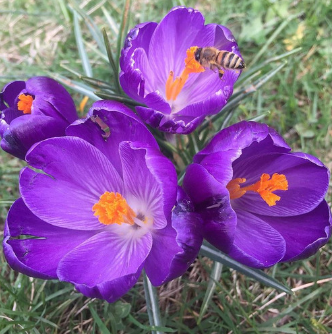
The crocus is a fantastic flower for pollinators such as bees. It is also perennial and will spread, if left alone, to create a wonderful carpet of colour every Spring, for which it is a true indicator. We look forward to enjoying this beautiful, delicate plant at Eglish for many years to come.
Bígí linn


 The Ballyeglish Society
Leave a comment