
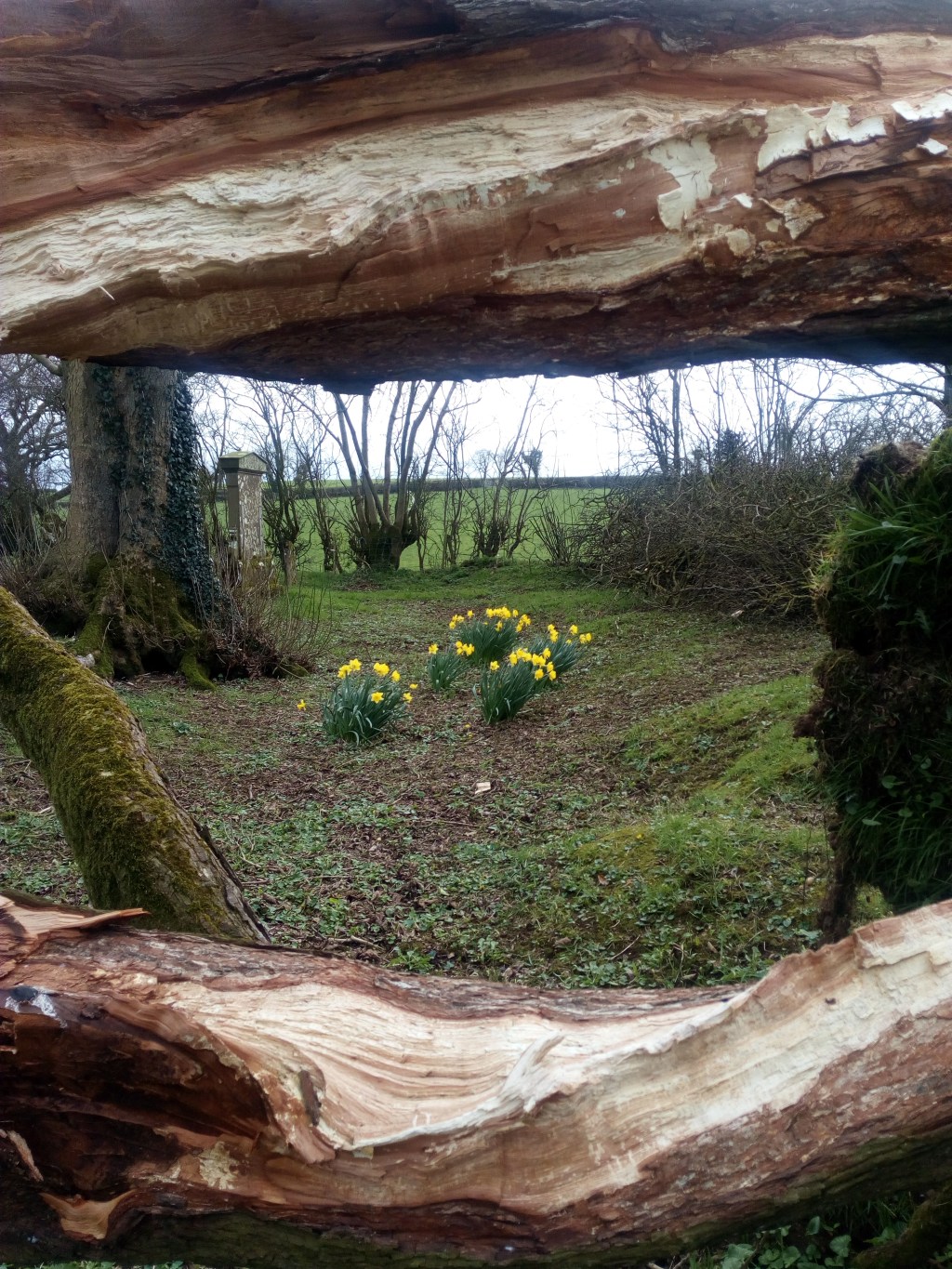
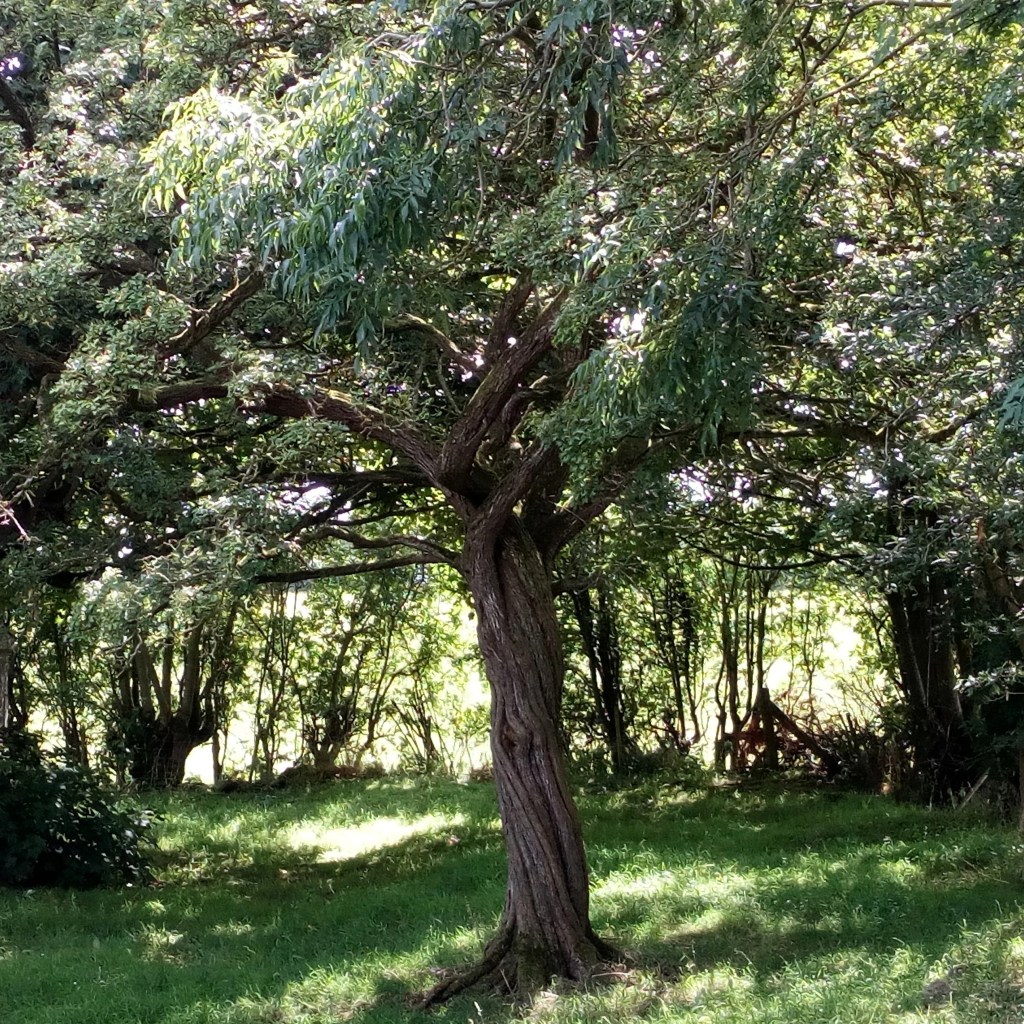
At The Ballyeglish Society, we like to chart the seasons as they sweep across the old burial site. It can be interesting to see any changes in the features or landscape, particularly the trees.
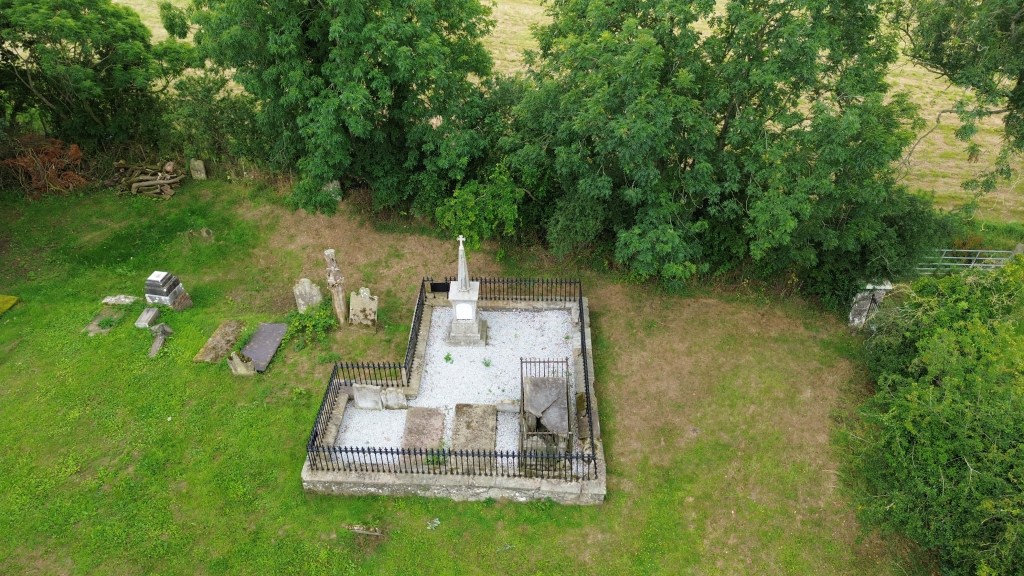
The video shown in this article will let you see what the Irish countryside looks like during the summertime. You will see the oft-spoken-of patchwork quilt of fields, and the melodic forty shades of green, natural beauty that we Irish all too often overlook or take for granted. It will also give you a bird’s eye view of the ancient site, and from a few different angles. When the many trees are in bloom, Ballyeglish Old Graveyard is a truly beautiful and serene place, and well worth the visit.
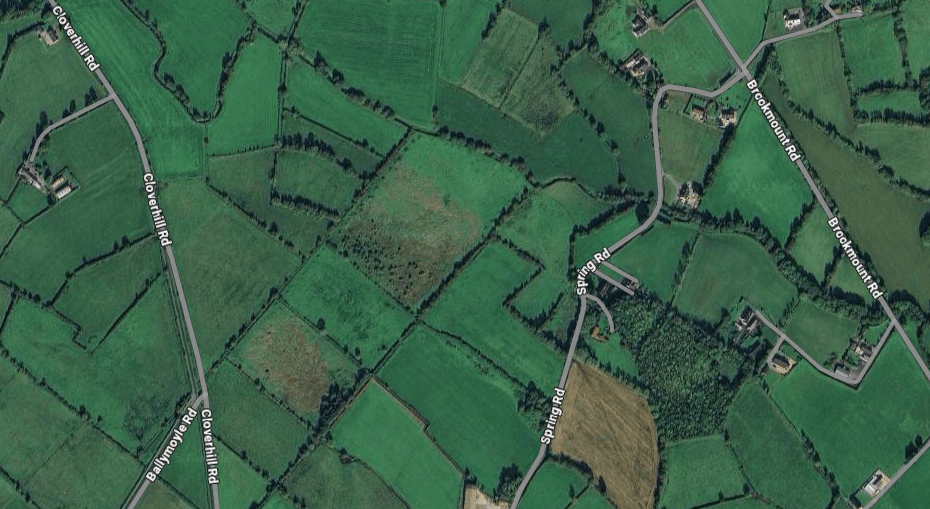
The footage begins tentatively at a lower level before it soars enthusiastically into the clear blue mid-Ulster skies, where we get to see Lough Neagh along its entire length, as well as Slieve Gallion(*). The village of The Loup can also be seen. Look for the stone churches of St Patrick and St Matthias close to the old burial site.
(*) The original Gaelic name for Slieve Gallion, which is usually given as Sliabh na gCallann, appears to be disputed. The first part, Slieve, is accepted as an Anglicisation of Sliabh, meaning mountain. However the second term is as yet not settled. Some claim it’s original Gaelic was of a man’s name (a giant don’t you know) who went by the name of Callann. He is reputed to have been buried on the western side of the mountain. Hmm… we wonder how many people it took to carry his coffin…
We at The Ballyeglish Society are usually pretty sceptical about personal names being used in translated place-names. It happens, and places are quite often named for people. However, we have observed that when there is any doubt over a place-name, in townlands for example, someone just decides that the unknown word is from a name. It’s a lazy approach to historical research that should be treated with great caution. Ballymulderg as townland of the Muldergs or Ballymulligan as townland of the Mulligans etc.
Moyola is another good example of this. It’s translated from the suggested original Gaelic of Magh Eola, meaning Eola’s plain. However, Eola is not a Gaelic name, so it seems unlikely that such would be used for a major place-name. An amateur researcher (name escapes us at this time), some decades ago, suggested that the original was Magh Dhá Loch, meaning the Plain of the Two Loughs, those being Lough Neagh and Lough Beg. Over time, the pronunciation of the names then changes to become Moyola. This makes more sense. However, in that case, the Gaelic would then be Dhá Lochanna (plural). It’s possible that the “anna” was eventually dropped in a form of local slang. That practice happens in the English language too. The two loughs suggestion would appear more reasonable than attributing a plain to someone that is not recorded in the myths and legends, and does not have a Gaelic name.
As for Slieve Gallion, in the place-names book by the renowned scholar P.W. Joyce, a “Gallan” is listed as a standing stone when used in place-names, and the term “Gallon” is a measure of land in County Cavan. The first could be more readily applied to Sliabh na gCallann (Mountain of the Standing Stone?), as there are numerous examples to choose from on the mountain. The western side of Slieve Gallion is a veritable Valley of the Kings, as numerous Royals were reputed to have been interred there in the long ago at Ballybriest (near Lough Fea).
Finally, we also have the example of Slieve Gullion in south Armagh. Gullion is also disputed in translation, and the meaning is given as both “Steep slope” and “Holly.” The Gaelic for holly is cuileann, which seems the most likely meaning, and could also be applied to Slieve Gallion given the manner in which we Irish tend to pronounce words, regardless of language, in whatever way tickles our fancy at any given time. It’s all up the air which, thankfully, the drone no longer is as we managed to get it back down.
Phew! We hear you cry, repression of the digression and let asides stay offside, are we ever going to get to the video? Fear not. Here it is. We hope you enjoy.
(No animals were harmed in the making of this film)
- No animals were harmed in the making of this film –
Bígí linn

 The Ballyeglish Society
Leave a comment