
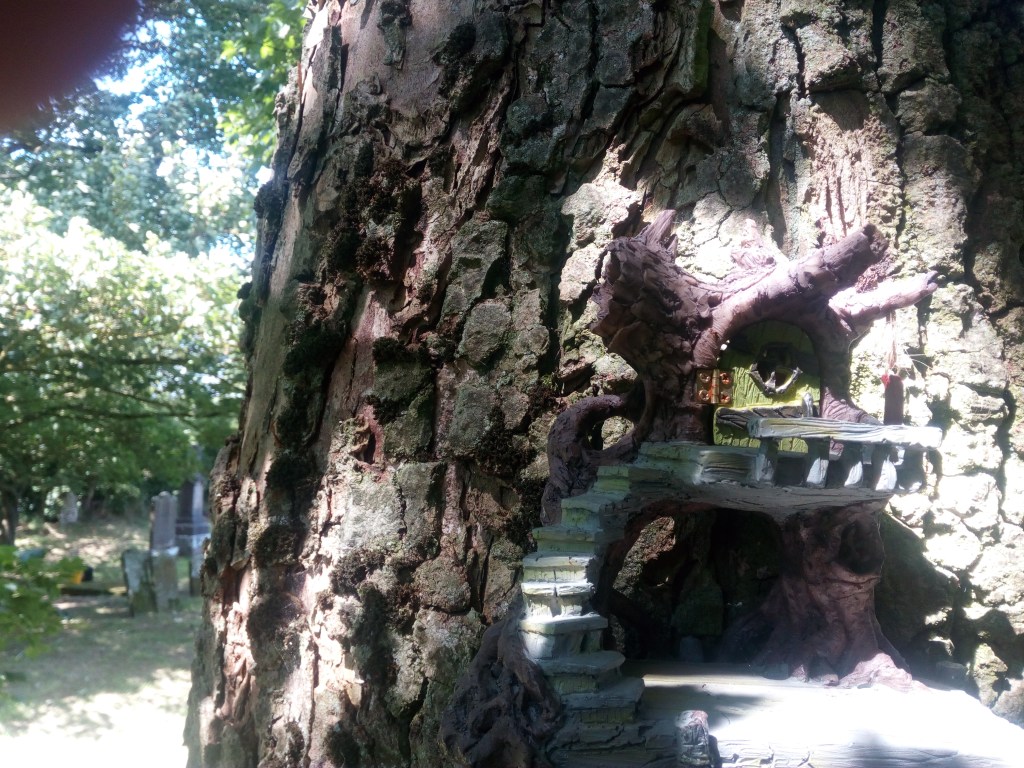
If there are two things that Ireland has no shortage of, it’s rain and myths. Sometimes, they’re even connected. Ancient places have their stories, and many’s the yarn that has been shared around the hearths of this green island for countless generations. To better understand local mythology, let’s delve a little deeper into the old tales, and how they relate to Ballyeglish Old Graveyard.
Faeries, Fey, The Little People, Fairies, Sídhe, Elves, Pixies, Brownies, Puck, Daoine Síth or Aos Sí, all names for small, supernatural people who flit about, often playing music, dancing, singing, and causing mischief when provoked or bored. There will be many origin myths for these different yet similar beings. In this piece, we will take a look at the Irish variety, known formally as the Aos Sí (eesch shee).
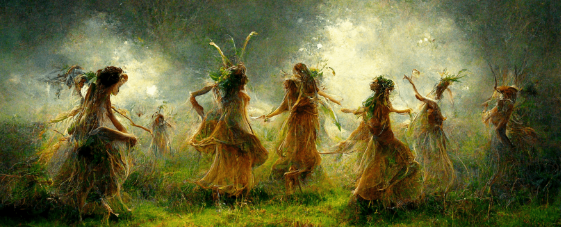
In one telling of the tale, it all began with Nemed, the leader of a tribal group from the Near East, whose fleet set sail from the Caspian Sea with only Nemed’s ship making it to Ireland. His wife was Macha, for whom Ard Mhaca is named (she is one of a number of notable women to have held that fine name). There are two tentative dates given for his arrival to the island of Ireland, 2350BCE and 1731BCE. These are based upon euhemerized accounts of the stories, in which an approach is taken that old myths are based upon facts that have become distorted over millennia, exaggerating and mutating almost beyond recognition. Other accounts are based solely upon the approach that myths have always been fictional and/or metaphorical. The Christian bible is a partial comparison as it is dependent upon the approach taken in interpretation.
The Nemedians arrive in Ireland 30 years after the Partholonians have all but died out due to plague. They are remembered in the place name, Tallaght, in County Dublin. The name come from Támh leacht (plague grave/memorial stone). During their time in Ireland, 4 loughs springs up, including one at Loughgall in County Armagh. They are also said to have cleared 12 plains, some of which were in Ulster, including Mag Tochair in modern day Donegal, and Mag Macha in territory that includes the place where Ballyeglish Old Graveyard lies.
Nemed and his people built two royal forts, one of which was in Ulster, Rath Chindeich, which may perhaps mean, the fort of 10 ditches. They fought 4 great battles against the Formorians, a terrible race of mystical giants of villainous countenance who plagued many of the first peoples to settle in Ireland. There is little agreement as to where the Formorians came from, but one source has them dropping in from the Middle East, like evil tourists from a cruise-liner. The constant attacks of the Formorians is likened to the never-ending battle between good and evil, darkness and light, that is found in all mythologies across the world. In Irish myth, however, there can often be a strong overlap, or intermingling, between the two, which is perhaps a more realistic view of life.
Nine years after his arrived in Ireland, Nemed and 3000 of his people died of the plague. What sort of homes did they live in that so many were dying back then? Surely a drop of póitín and a well-buttered wheaten scone would have sorted them all out? Nemed was said to have been buried on Ard Nemid, to be found today in Cork Harbour. His death was a disaster for his people. The remainder of the Nemedians were effectively enslaved by the Formorians, who had a plush HQ on Tory island just off the coast of Donegal, much like something SPECTRE might have had back then (I’m glad Patsy Dan Rodgers is not around to read this or he might box my ear).
But the Nemedians were not to be subdued and rose up against their oppressors. They attacked Conand, a Formorian chief, with an army of 60,000, and succeed in killing him and destroying his fort on Tory. Unfortunately, Morc, yet another Formorian chieftain, destroys the Nemedians, killing all but 30 who escape Ireland and sail north (I’m hearing the soundtrack to Lord of the Rings for some reason). It is during this period that the Nemedians transform into the much fabled Tuatha Dé Danaan.
Tuatha Dé Danaan
This is where it gets really interesting. The TDD, as we shall refer to them to save space, were a heady bunch of supernatural people responsible for shaping Ireland as we know it – if we are to adopt the euhemerized (there’s that word again) approach. The name comes from tuatha, meaning people or tribe; dé, meaning deity or supernatural entity (Peter Canavan in Tyrone); and Danaan, coming from the goddess, Danu. So, Tuatha Dé Danaan – People of the Goddess, Danu. The origins of the goddess are obscure and subject to much debate. It appears likely that the name is of the same root as other Indo-European deities found across Europe and India. Think, River Danube (named for a deity).
When the TDD arrive on The Emerald Isle, lead by their king Nuada, it is under the control of the Fír Bolg. A great battle is fought at Magh Tuireadh in Connaght, between the two groups. The TDD emerge victorious and the Fír Bolg are either vanquished from Ireland or subsumed into TDD society, dependent upon whom you talk to. Sadly, Nuada lost an arm in the battle (well, you would, wouldn’t you). In ancient society, only an unblemished male could hold the kingship (acne anyone?), and so Bres, a half-TDD, half-Formorian, took the title. We can see the ever-present Formorians interjecting in many aspects of life.
Bres turned out to be a tyrant, unlike Bressie (singer of The Blizzards and former Westmeath county footballer) who is probably not just as bad. Nuada got a new silver, arm which eventually grew skin over it, making him an early Irish Bionic Man. He took back his kingly title. Bres was a tad upset and, given the perks that come with being king, who could blame him. He complained to the Formorian ruler, Balor, a malign individual who apparently made Cromwell look like Mary Poppins. Balor soon who waged war upon the TDD.
The Second Battle of Magh Tuireadh was fought between the two otherwordly armies, with the Tuatha Dé Danaan again emerging victorious, but at a cost. Nuada is killed by Balor, who is in turn slain by his grandson, Lugh (Christmas gatherings must have been joyful events in that family). Lugh went on the lead the TDD, and is remembered today in the festival, Lughnasadh (1st August). Let’s remember also that Bríghid’s the goddess’ feast day is 1st February.
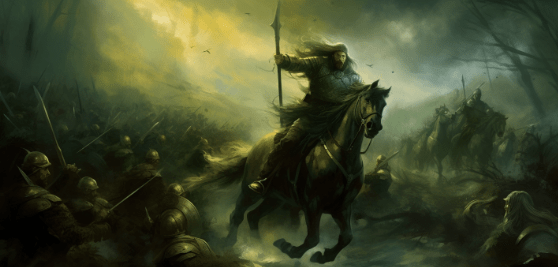
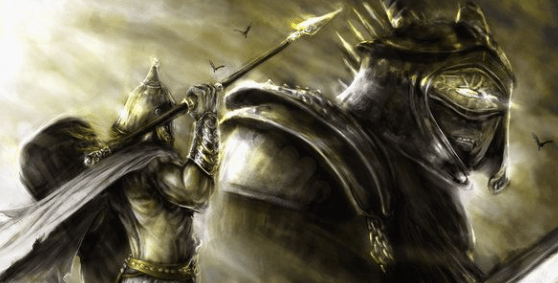
Things in Ireland settled down for a time, before a new group of arrivals caused trouble. The Milesians came from the eastern Mediterranean, by way of the Iberian peninsula. Yet another great battle was fought involving the Tuatha Dé Danaan, this time at Tailtiu (Teltown in County Meath). On this occasion, the TDD ran out of luck and were defeated. Some say that the magic of the TDD was rendered useless by the iron weaponry of the Milesians although timelines make this theory awkward given the Iron Age wasn’t to reach Ireland for a few hundred years after the speculated date for the Battle. But maybe the evidence just hasn’t been found yet.
It is noteworthy that the Taileann Games, last held in 1932, was a part of Irish life from the time of the battle. They were trials of strength and skill. The competitions were akin to a cross between The All-Ireland Fleadh and the Olympics, with singing, spear-throwing, dancing, chariot-racing, story-telling and sword-fighting among some of the sports covered. The later revival, after partition, included chess, motorcycle racing and shooting.
When the conditions for surrender were set out after the battle, Amergin of the Milesians, stipulated that the Tuatha Dé Danaan would rule Ireland below the ground, and the Milesians above. It was then that the People of Danu were led both into the Sídhe, the mounds beneath which they were to reside, and Tír na n-óg, The Land of Youth, which the goddess, L’Oréal, searches for, even today.
Over time, and through imagination, the magical Tuatha Dé Danaan have transformed into the Faery people that we know and love, and sometimes fear, across Ireland. Below is a tentative chronology of the leaders of the TDD:
Nuada (first reign) ended 1897 BCE, Bres 1897-1479 BCE, Nuada (second reign) 1479-1447 BCE, Lugh 1447-1407 BCE, Eochaid Ollathair 1407-1337 BCE, Delbáeth 1337-1327 BCE, Fiacha 1327-1317 BCE, MacCuill, MacCecht, MacGréine 1317-1287 BCE.
There is no part of Ireland where the Tuatha De Danaan have not been seen or heard over centuries. OK, excessive consumption of alcohol and perhaps a few schrooms might have had something to do with that, but a love for the old tales has had a much greater part to play in their presence.
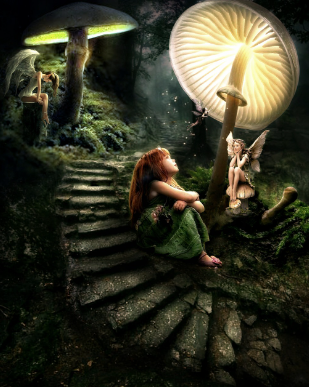
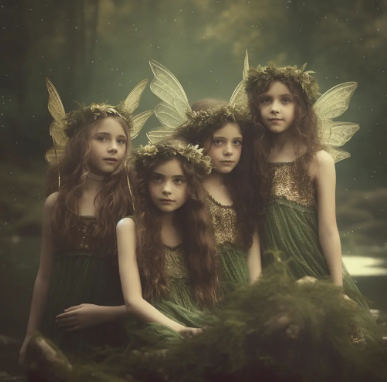
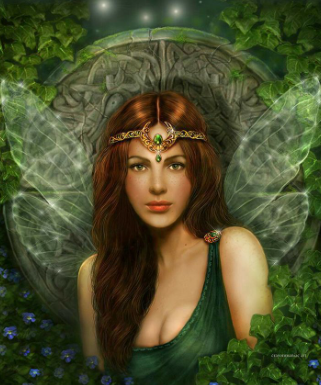
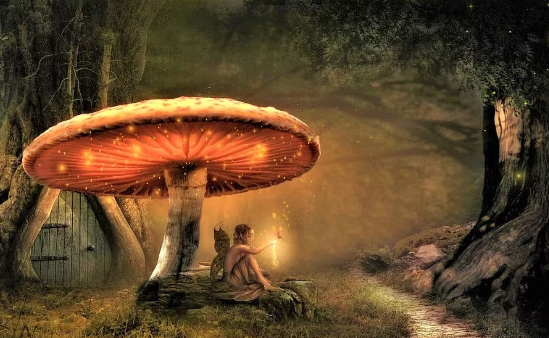
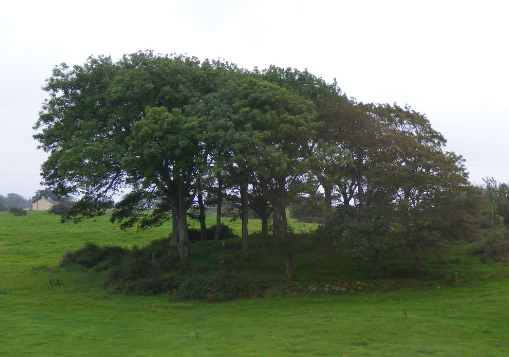
They are referred to in Irish Gaelic as the Aos Sí/Daoine Sí, or people of the mounds. In Scottish Gaelic they are the Daoine Síth, which means the same (ooh, Star Warsy). The mounds mentioned are what we know today as Fairy Forts which, in all likelihood, are the ancient burials places of those who lived centuries or even millennia before. Burials places are always said to hold the spirits of those who died. It’s easy to see how a superstitious and religious people would view the old burials places with a degree of caution, especially with a backstory like the one just related to you. It has been an inadvertent and quaint means of protecting ancient places, so that we can see them today.
Hawthorn trees grow on old, untouched places like Faery Mounds. They also tend to thrive near to old wells, and are used as rag/clootie/prayer trees. The cut wood is described as having a smell not unlike dead meat, perhaps one reason why it was deemed bad luck to bring hawthorn wood into a home. It is understandable that the Aos Sí became associated with the hawthorn, given the connection of both to burial places and other spots of mystery, including copses of trees that might be growing on both larger and small mounds.
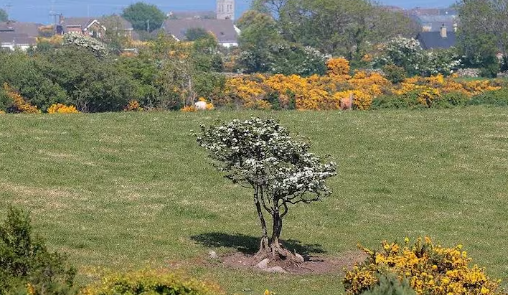
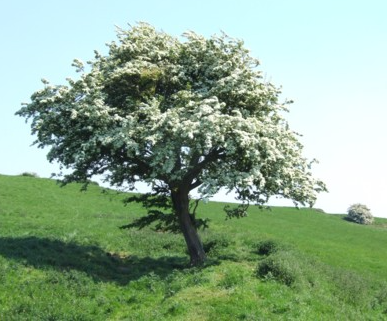
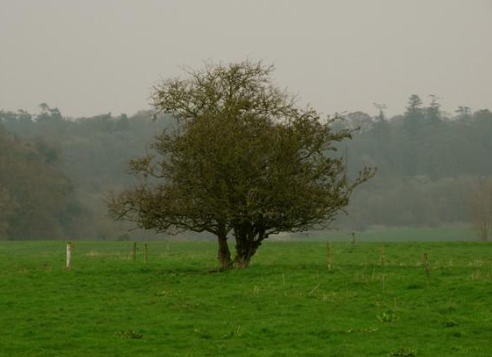
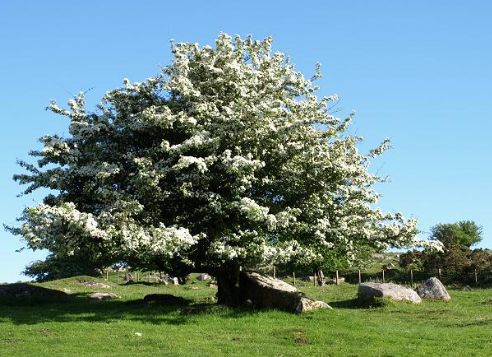
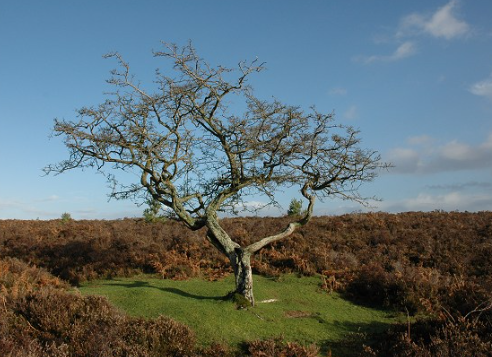
Over time, the concept of the Little People has been romanticised, and has taken on a new life in modern literature and other art-forms. Has anyone reading this not seen Darby O’Gill chasing King Brian all over Knockshee? Sean Connery sings in it for gawd’s sake. It’s worth seeing for that alone. We can also wonder just how many people out there would dare damage a Faery Tree? If you drive along the roads and boreens of Ireland, you will see a multitude of Faery Trees, standing alone in the middle of fields, the farmer refusing to remove them, even though they would state no belief in the faeries. Why the reverence?
It could be speculated that such superstitions provide insight into the psyche of the people of Ireland. Are the people of our island wearing Christianity as a veneer, to lightly mask the old beliefs that live beneath, just as the Aos Sí move below us? Remember, Christianity has been here for less than 1600 years. Pagan beliefs have been here for more than 12,000. We might well be genetically predisposed to believe in deities of trees, rivers, loughs, the air and beneath the ground.
At Ballyeglish Old Graveyard, we have a gentle syncretism of both the old and new religious beliefs of the area. The holy well originated in paganism and was adopted by early Christianity. We have a beautiful hawthorn with a spiralled trunk, long regarded as a Faery Tree by visitors, which has been recently been revealed to have been planted by a 94 year old Penal Times Catholic priest, in 1805. We might wonder why he chose that particular type of tree to plant in the graveyard. Whatever the reason, it lends a mystical appeal to an ancient burial place that speaks of older times and older ways.
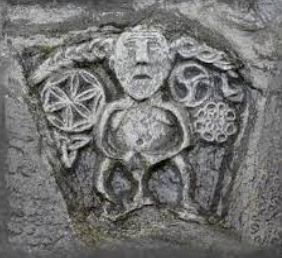
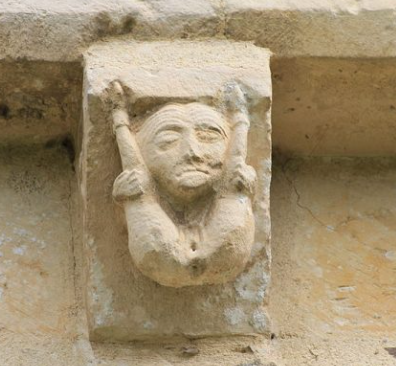
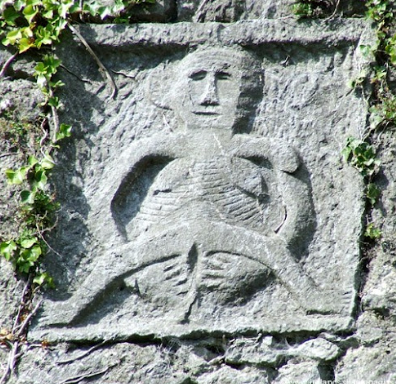
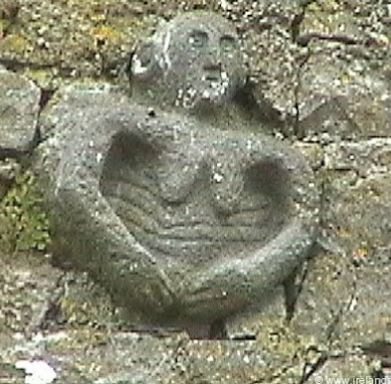
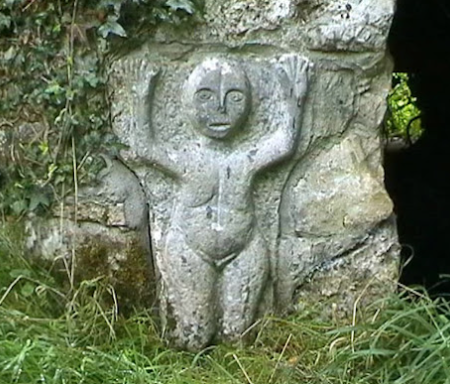
(below are examples of Sheela na gig, usually found on medieval churches. Ireland has approximately 124 surviving, the largest number of any country. The is no agreement upon the origins of these stone carvings. Debate continues as to their antiquity, and the meaning of the name. Some say they are pre-Christian fertility symbols adopted by the new faith. Others claim they are early medieval statements upon evil of lust. They are found throughout Europe. The Ballyeglish Society leans toward the pagan source for these strange images)
When setting out the project to develop Ballyeglish Old Graveyard as a place of increased interest to the general public, The Ballyeglish Society had intended to provide some interest to younger visitors, brought to the site by their parents/guardians and grandparents. Our aim was to instil a love of Ballyeglish from an early age, in the hope that it would remain with the children and be carried into their adult lives, when they would then become guardians of the place. More visitors, of whatever age, means a more certain future for Ballyeglish Old Graveyard.
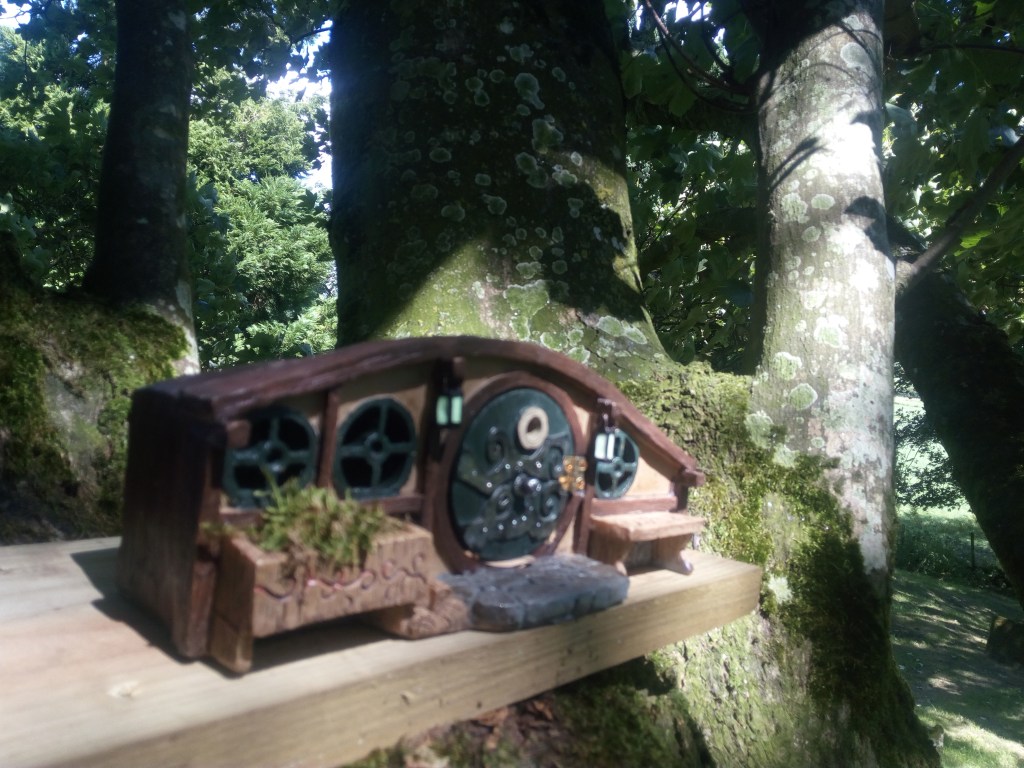
To accomplish this, we determined to create features of interest for the young. We already had a holy well and Faery Tree, but felt that these could be supplemented by the creation of a Faery Village. It’s an approach that has worked successfully in other projects across Ireland. It also encourages children away from TV’s and into the healthy great outdoors, and perhaps they will even be the ones who badger parents into getting up off the sofa to take them to visit the place where the faeries reside.
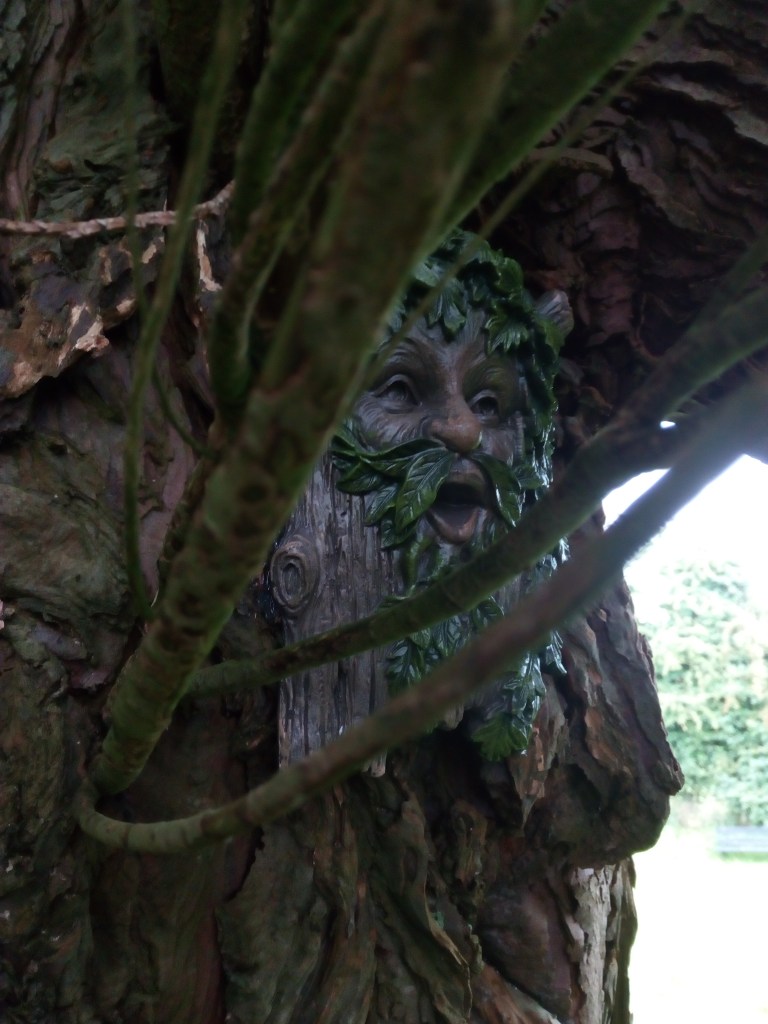
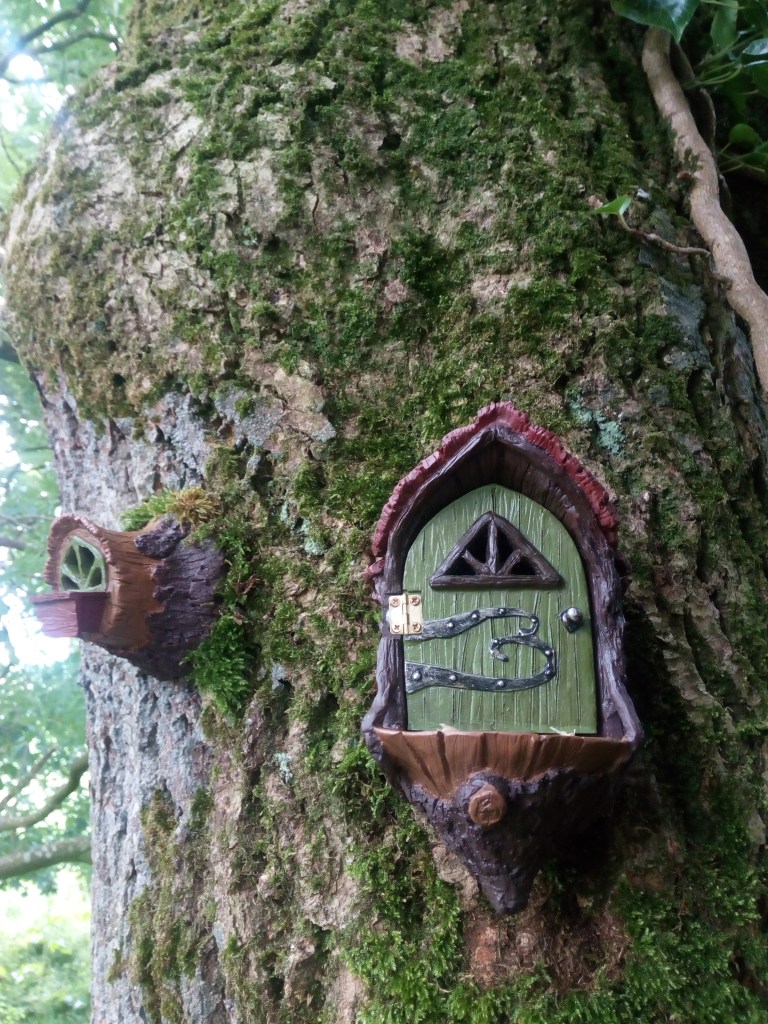
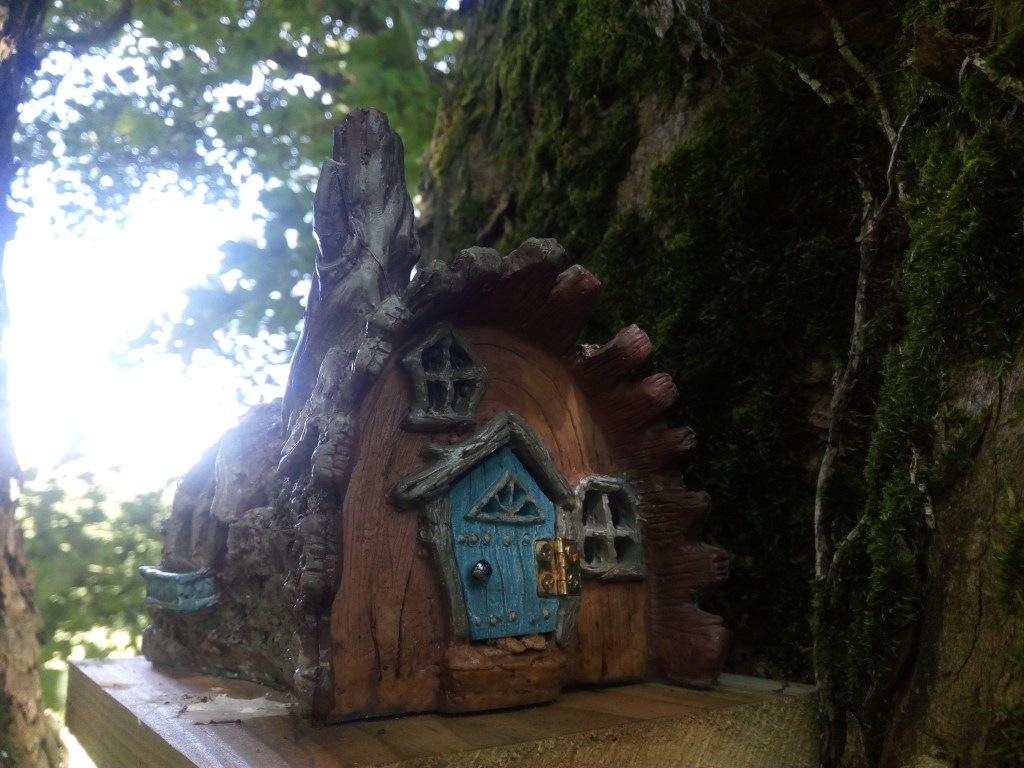
However, in tandem with this, The Ballyeglish Society was fully aware of the fact that the old graveyard is first and foremost a religious site. We realised that any work had to walk the line between providing entertainment for children, whilst respecting the religious character of the site. Discretion was important. To this end, all faery features were positioned in places where they were not immediately visible, especially in good weather when visitors numbers are higher. The trees were utilised for this, with houses and doorways fixed safely where you had to seek them out.
Currently, there are 10 faery houses of fairly sturdy and elaborate construction at Ballyeglish Old Graveyard, with more to be positioned later in 2024 (after scheduled Mid Ulster District Council tree works). There are 8 resident tree spirits there (4 plagues and 4 blended into the bark). Some are difficult to find, even now that you know that they’re there, such were the efforts made to be discrete. There are also numerous doorways into the trees themselves, to provide access for the Aos Sí. We intend to increase the prevalence of these features to the maximum that discretion will allow over time. It will provide something akin to a treasure hunt for the young, as they seek out the homesteads of the magical little people of lore.
From Nemed and his battles, to Nuada and his silver Arm, and his battles, to the final Tuatha Dé Danaan battle with the Milesians, and then the beginning of their lives as a people of fable, legend, and myth, the Aos Sí, or Faeries if you prefer, have always been associated with the area to the west of Lough Neagh. They were gods and goddesses once, perhaps they still are; supernatural beings who wander the quiet places, the shadowy spaces, where the fortunate few get only a fleeting glimpse or snatch of song. And no story of Ballyeglish Old Graveyard would be complete with the presence of these magical folk.
(additional articles on this topic will be found via the sub-menu for Mythology, which is titled Mythology – Posts)
Bígí linn

 The Ballyeglish Society